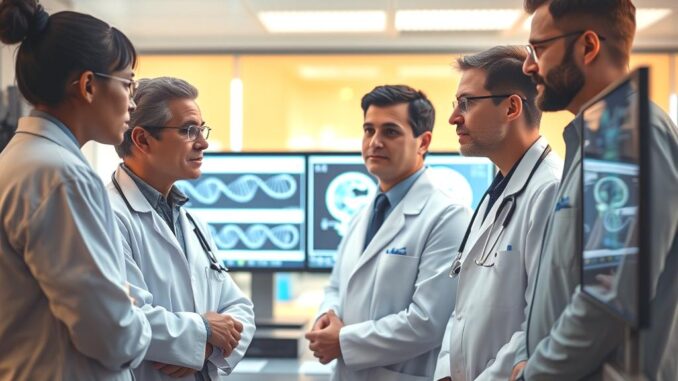
Today’s medical research focuses on developing treatment strategies that respond at the molecular level, going beyond the traditional approach in the fight against lung cancer. In this context, the concept of Personalised Radiotherapy is becoming increasingly important. Next-generation sequencing technologies and bioinformatic analyses offer the potential to customise the treatment plan from patient to patient by elucidating responses to radiotherapy at the genetic level. This article takes an in-depth look at how the radiogenomics approach works, which genes are common responders to radiotherapy and how it transforms treatment decision processes.
Genetic Traces of Radiotherapy
Radiotherapy targets tumour tissue, causing cellular DNA damage. However, tumour cells respond to this damage at different levels. With next generation sequencing (NGS) technologies, the expression of hundreds of genes can be analysed simultaneously to map genes that are sensitive and resistant to radiotherapy. Studies, especially in the context of lung cancer, reveal that there are 12 common genes that change after radiotherapy, 7 of which are associated with tumour growth, suppression and immune response. These findings indicate that genetic indicators play an important role in the treatment plan.
12 Gene Competence and Treatment Response
Among 12 genes that change in response to radiotherapy, 5 genes were found to increase significantly after radiotherapy. These genes can play an effective role in brain or bone tissues that are prone to disease recurrence and metastasis. This strengthens the tumour’s tendency to develop defence mechanisms and resistance. However, this challenge also brings opportunities for new targets and more precise therapeutic strategies. In particular, genetic markers that predict the risk of neuro-metastasis and bone metastasis may improve treatment efficacy by strengthening clinical decision support.
Transcriptomic Perspective with NGS and RNA-Seq
In this study, RNA-Seq analysis played a critical role in monitoring the instantaneous gene expression of cells. RNA-Seq quantifies gene expression with high accuracy and shows which genes are activated or silenced after radiotherapy. Thus, the regulatory steps of resistance mechanisms are determined and treatment strategies are designed based on these steps. Furthermore, the processes of formation of protein isoforms and regulatory contexts are also illuminated by this data, providing key clues for targeted drugs or combinations with immunotherapy.
The Future of Personalised Approach to Radiotherapy
Tailoring radiotherapy dose to the individual has the potential to optimise patient response while minimising side effects. Response detection at the molecular level supports a client-centred approach to radiotherapy, rather than giving the same dose to all patients. By integrating clinical decision support systems, doses and treatment durations can be calculated according to the patient’s genetic profile. This approach is a critical step towards reducing radiotherapy-related immediate side effects and improving treatment efficiency.
12 Gene Discovery and Clinical Applications
the discovery of 12 genes is an important milestone towards molecular mapping of radiotherapy in lung cancer. These genes represent key targets that can break the intrinsic resistance of the disease, enhance the immune response and predict the risk of metastasis. In terms of clinical impact, combined treatment strategies for some of these genes have significant potential. For example, for resistant genes, combined approaches with immunotherapy or targeted drugs may enhance patient response to treatment.
The Bridge from the Laboratory to the Clinic: NGS and Clinical Decision Support
Integration of laboratory-based findings into clinical decision-making processes strengthens patient-specific treatment plans. DNA fragment generation and sequencing processes clarify the genetic map of the tumour. This map is used to optimise radiotherapy doses, reduce the risk of recurrence and predict metastasis trends. In addition, the data obtained by bioinformatics analysis support decision points in treatment and enable multidisciplinary teams to act with a common mind.
Future Goals and Scientific Roadmap
Future studies aim to deepen the mechanisms underlying resistance genes. In this way, the biological behaviour of radiotherapy-resistant cells will be more clearly understood and new therapeutic approaches will be developed to overcome these resistances. In addition, the integration of personalised radiotherapy plans into clinical protocols will maximise treatment safety and efficacy. In this context, the systematic use of NGS-based radiogenomic data in clinical decision-making processes will play a key role in the standardised disease management of the future.
International Clinical Impact and Scientific Publications
This comprehensive study is not only one of the first studies based on next-generation sequencing in Turkey, but also an important scientific output published in reputable international journals. The findings provide a solid foundation for the integration of radiogenomic approaches into clinical decision-making processes in lung cancer treatment and have the potential to reshape radiotherapy practices worldwide.
Radiogenomic mapping is not only of academic interest, but also enables the creation of patient-specific treatment plans in clinical practice. This approach aims to optimise dose, reduce side effects and increase treatment efficacy for patients. Thus, the paradigm of safe, effective and personalised treatment in the fight against lung cancer is becoming increasingly surprising and feasible.